A Safer, Smarter Way to Check Your Liver Health.
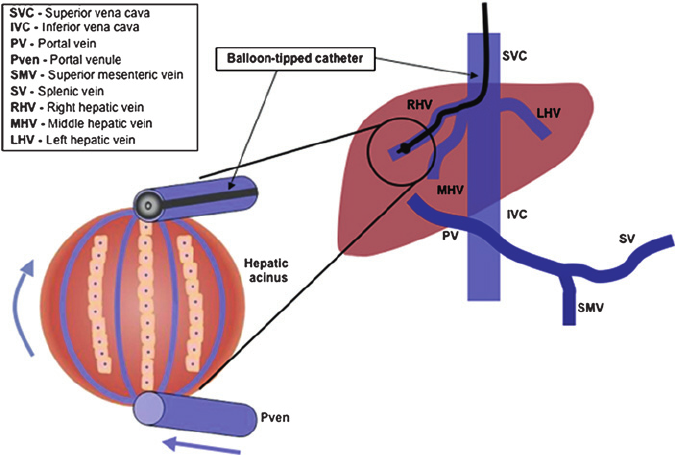
HVPG (Hepatic Venous Pressure Gradient) is a safe, minimally invasive procedure that measures the pressure difference between the portal and hepatic veins to assess portal hypertension, often caused by liver cirrhosis or chronic liver disease. It provides critical insights into liver function, helping doctors determine disease severity, evaluate the risk of complications like variceal bleeding, and monitor the effectiveness of treatments, enabling personalized management of liver health.
Preparation: The patient may fast for a few hours and receive mild sedation.
Catheter Insertion: A thin catheter is inserted through a vein in the neck or groin and guided into a hepatic vein.
Pressure Measurement:
Free Hepatic Venous Pressure (FHVP): Reflects normal venous pressure.
Wedged Hepatic Venous Pressure (WHVP): Reflects portal vein pressure.
HVPG Calculation: WHVP – FHVP.
Interpretation:
Normal: 1–5 mmHg
Portal Hypertension: ≥6 mmHg
Clinically Significant: ≥10–12 mmHg
Cirrhosis or Advanced Liver Disease – HVPG helps doctors assess the pressure within the liver’s blood vessels, providing a clear picture of disease severity and identifying the risk of complications that can arise from liver dysfunction.
Variceal Bleeding Risk – By measuring portal pressure, HVPG can determine the likelihood of esophageal or gastric varices rupturing, which is a serious and potentially life-threatening complication of portal hypertension.
Monitoring Treatment Response – HVPG allows doctors to track how well medications or medical procedures are reducing portal pressure, helping to adjust treatment plans for better outcomes and preventing complications.
HVPG is generally safe and well-tolerated. Complications are uncommon but may include:
Mild bruising or bleeding at the catheter insertion site – Some patients may notice minor bruising or slight bleeding where the catheter is inserted, which usually resolves on its own.
Temporary pain or discomfort in the neck, groin, or liver area – Mild discomfort may occur during or after the procedure, but it is typically short-lived.
Rarely, more serious complications such as infection or bleeding inside the liver – Serious issues are uncommon, but your doctor will take all precautions to minimize risks.
The procedure is minimally invasive, does not involve significant radiation, and provides critical insights for managing liver health effectively.