
Specialized diagnosis and treatment for all gastrointestinal disorders.
ERCP (Endoscopic Retrograde Cholangiopancreatography) is a highly specialized procedure that combines endoscopy and X-ray imaging to diagnose and treat disorders of the bile ducts, pancreatic ducts, and gallbladder. It’s one of the few gastrointestinal tests that allows doctors to not only see the problem but also fix it during the same session.
Preparation: Before the procedure, patients are asked to fast for several hours so the stomach is empty. Sedation or general anesthesia is given to make the patient relaxed and comfortable.
Scope Insertion: A flexible endoscope (a thin tube with a camera and light) is passed through the mouth, esophagus, and stomach into the duodenum (the first part of the small intestine).
Duct Cannulation: Once in position, the doctor passes a thin catheter through the scope into the opening of the bile duct or pancreatic duct.
Contrast Injection: A special contrast dye is injected into the ducts. This makes them clearly visible on an X-ray, helping the doctor see blockages, stones, strictures, or other abnormalities.
Treatment: Depending on the findings, treatment can be performed during the same procedure. This may include removing gallstones, dilating narrowed ducts, inserting stents, or taking tissue samples (biopsy).
Completion: After the treatment, the scope is carefully withdrawn. The patient is monitored in a recovery area until the effects of sedation wear off.
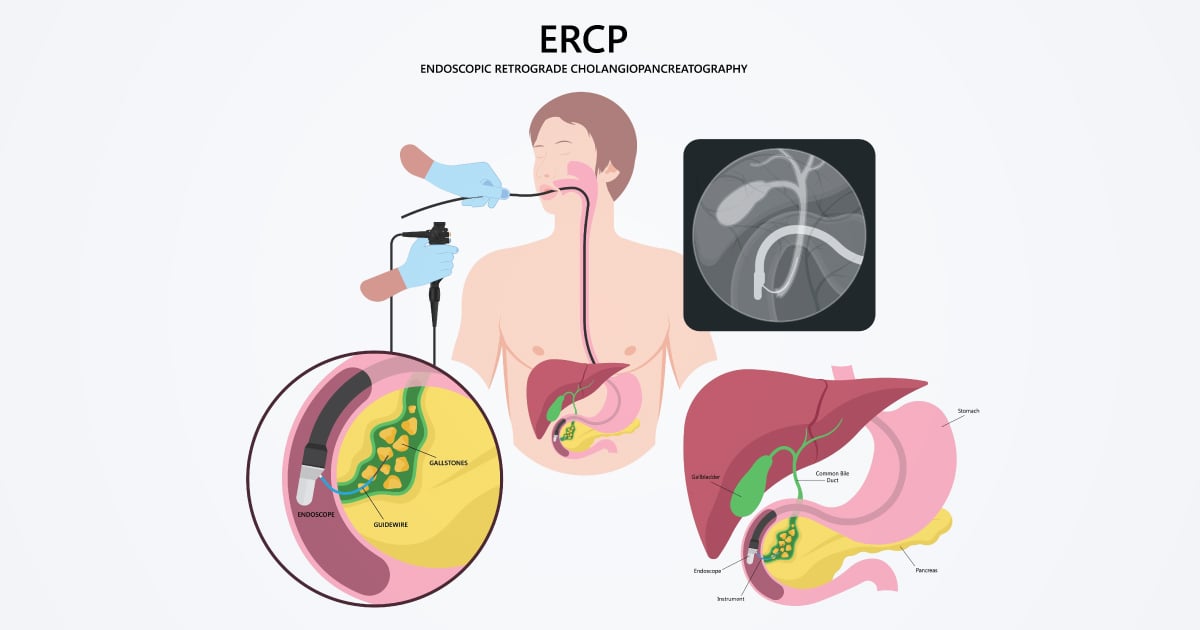
ERCP is one of the most effective ways to locate and remove gallstones that have migrated into the common bile duct—a potentially dangerous condition that can lead to infection and liver damage.
Scarring or narrowing of the bile ducts—often due to surgery, inflammation, or cancer—can cause bile flow obstruction. ERCP helps by dilating strictures and placing stents to restore drainage.
Blockages in the pancreatic ducts, whether from stones, scarring, or tumors, can cause pancreatitis or pain. ERCP allows doctors to relieve these obstructions.
In patients with chronic inflammation of the pancreas, ERCP can identify ductal changes, remove duct stones, or place stents to relieve pain and preserve function.
If a tumor is suspected, ERCP can assist in visualizing the blockage, collecting tissue samples, and placing drainage stents to relieve symptoms while awaiting further treatment.
Sore throat – caused by the endoscope passing through the mouth and throat.
Mild bloating or abdominal cramping – due to air introduced during the test.
Temporary drowsiness or discomfort after sedation – some patients may feel tired or lightheaded until the sedatives wear off.
Though ERCP is generally safe, a few patients may experience more serious complications:
Pancreatitis – The most common complication, seen in about 5–10% of cases. It happens when the pancreas becomes irritated. Symptoms include abdominal pain, nausea, and vomiting. Most cases are mild and resolve with treatment, but a few may be severe.
Infection (Cholangitis or Sepsis) – Infection of the bile ducts can occur if bacteria enter during the procedure. It may cause fever, chills, and abdominal pain and requires prompt medical attention with antibiotics.
Bleeding – Especially if a sphincterotomy (a small cut to remove stones or widen a duct) is performed. Bleeding is usually minor and controlled during the procedure, but rarely it may need additional care.
Perforation – A very rare complication where a small tear occurs in the intestine, bile duct, or duodenum. This can cause severe abdominal pain and may require urgent treatment or surgery.