
Advanced Imaging for Small Intestine Disorders – No Wires, No Discomfort.
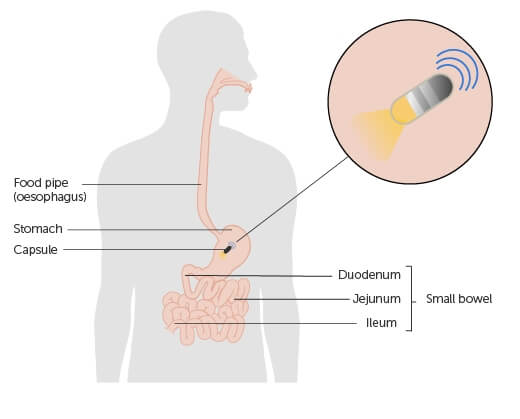
Capsule endoscopy is a modern diagnostic procedure that uses a swallowable camera capsule to take thousands of images of your digestive tract—specifically the small intestine. About the size of a large vitamin pill, this capsule travels naturally through your gastrointestinal system, capturing detailed images that are wirelessly transmitted to a recording device worn on your body.
Small Intestinal Bleeding
Helps detect ulcers, abnormal blood vessels, or small lesions causing hidden blood loss, anemia, or black stools when routine endoscopy fails.
Crohn’s Disease
Reveals inflammation, ulcers, and narrowing in the small intestine; also used to monitor disease progression and treatment response.
Small Bowel Tumors & Polyps
Identifies rare but serious tumors and polyps early, allowing timely diagnosis and preventing future complications.
Celiac Disease
Assesses intestinal lining damage in suspected or complicated cases, especially when biopsy results are unclear.
Unexplained Abdominal Pain
Provides a detailed view of the small intestine to uncover hidden causes when other tests show no results.
Preparation
You will be asked to fast overnight so your stomach and intestines are empty. In some cases, the doctor may prescribe a bowel preparation or clear liquid diet the evening before, to ensure the capsule gets the clearest possible images of your digestive tract.
Swallowing the Capsule
On the day of the procedure, a nurse will help you swallow the pill-sized capsule that contains a miniature camera. It is about the size of a large vitamin pill and can easily be swallowed with water. The capsule is painless and requires no sedation.
Data Collection
As the capsule moves naturally through your gastrointestinal tract, it captures thousands of high-quality images of the small intestine. These images are wirelessly transmitted to a recording device that you wear on a belt or shoulder strap. During this time, you can walk around and continue normal light activities while the test is in progress.
After the Test
After about 8–12 hours, you will return the recording device to the clinic. The capsule itself is disposable and will pass out of your body naturally in your stool, usually within a day or two. You don’t need to retrieve it. Your doctor will then review the collected images to identify any ulcers, bleeding points, inflammation, or other problems inside your small intestine.
Capsule Retention
In about 1–2% of patients, the capsule may get stuck in a narrowed area of the intestine. This usually happens if there is a stricture (narrowing) due to Crohn’s disease, a tumor, or previous surgery. If the capsule does not pass naturally, it may need to be removed through endoscopy or, rarely, surgery.
Incomplete Examination
The capsule has a limited battery life (around 8–12 hours). In some cases, it may not pass through the entire small intestine before the battery runs out. This can result in incomplete images and may require further testing.
Bowel Obstruction (Rare)
Very rarely, if the capsule gets stuck and causes a complete blockage, patients may develop symptoms like abdominal pain, nausea, or vomiting. This is uncommon and more likely in patients who already have known bowel narrowing.