Imagine being in your 20s or 30s, feeling completely healthy, going about your work and social life—and then a routine ultrasound suddenly reports “fatty liver.”
It can come as a surprise.
Many people still think fatty liver is mainly an age-related problem. But today, fatty liver is increasingly being identified in young adults, driven by changing lifestyles, sedentary routines, unhealthy eating patterns and metabolic health problems.
Earlier known as NAFLD (Non-Alcoholic Fatty Liver Disease), this condition is now commonly referred to as MASLD (Metabolic dysfunction-associated steatotic liver disease).
The important message is simple:
Fatty liver at a young age is a warning sign—not something you should simply ignore.
The good news? When identified early, there is often an opportunity to improve liver health through lifestyle changes and appropriate medical guidance.
Why Are More Young Adults Developing Fatty Liver?
Think about a typical modern routine.
Wake up late.
Skip breakfast.
Sit at a desk for hours.
Grab fast food during a busy workday.
Drink a sugary beverage or multiple cups of sweetened coffee.
Spend the evening scrolling on your phone.
Then go to bed late.
It may feel like a normal lifestyle—but over time, these habits can affect your metabolism and liver health.
Several factors can increase the risk of fatty liver:
- Excess body weight, especially abdominal fat
- Lack of regular physical activity
- Insulin resistance
- Diabetes or prediabetes
- High cholesterol or triglycerides
- Frequent consumption of processed foods
- Sugary beverages
- Excessive refined carbohydrates
- Poor sleep
- Sedentary work routines
- Certain medications or underlying medical conditions
And here’s something many people don’t realise:
You don’t have to look overweight to have fatty liver.
Some people with a normal-looking body weight can still develop metabolic dysfunction and liver fat.
Fatty Liver in Your 20s or 30s: Should You Be Worried?
A fatty liver diagnosis doesn’t automatically mean that your liver is permanently damaged.
But it is a reason to pay attention.
For some people, liver fat may remain relatively stable. In others, ongoing metabolic problems can contribute to inflammation and fibrosis, which means scarring of the liver.
Over many years, advanced fibrosis can progress to cirrhosis and increase the risk of serious liver complications.
That’s why the real question isn’t simply:
“Do I have fatty liver?”
It should also be:
“Is my liver healthy, and am I at risk of developing fibrosis?”
This is where proper medical evaluation becomes important.
Can Fatty Liver Exist Without Any Symptoms?
Yes—and that’s one of the biggest reasons young adults overlook it.
Early fatty liver often doesn’t cause obvious symptoms.
You may:
- Go to work normally
- Exercise occasionally
- Eat normally
- Feel energetic
- Have no abdominal pain
…and still have fatty liver.
Some people may experience tiredness, mild discomfort in the upper-right abdomen or nonspecific digestive symptoms, but these symptoms don’t specifically diagnose fatty liver.
In many cases, the condition is discovered during a routine ultrasound or blood test.
So if your health report says “fatty liver,” don’t simply close the report and forget about it.
It deserves proper assessment.
Best gastroenterologist near me at Vasant Kunj: What Should You Do After a Fatty Liver Diagnosis?
The first step is don’t panic—and don’t self-medicate.
A fatty liver diagnosis should be evaluated in context.
Your doctor may look at:
- Liver function tests
- Blood sugar and HbA1c
- Cholesterol and triglycerides
- Weight and waist circumference
- Blood pressure
- Medical and family history
- Ultrasound findings
- Risk factors for liver fibrosis
Depending on your individual situation, additional non-invasive tests or imaging may be recommended.
The objective is to create a clear picture of your liver health rather than relying on a single report.
1. Make Your Plate Liver-Friendly
You don’t need an expensive “detox” programme to support your liver.
Start with your everyday food.
Try incorporating:
More:
- Vegetables
- Whole grains
- Fibre-rich foods
- Pulses and legumes
- Appropriate portions of protein
- Nuts and seeds in moderation
- Minimally processed foods
Less:
- Sugary drinks
- Excess sweets
- Highly processed snacks
- Refined carbohydrates
- Fried foods
- Oversized portions
- Frequent fast food
The goal isn’t perfection.
The goal is consistency.
A healthy meal today followed by unhealthy eating tomorrow won’t change much. Sustainable habits maintained over months and years can make a much bigger difference.
2. Move More—Your Liver Benefits Too
Your liver doesn’t only benefit from what you eat.
It also benefits from what you do.
Regular physical activity can improve metabolic health and help reduce excess body fat.
Depending on your health and fitness level, activities may include:
- Brisk walking
- Cycling
- Swimming
- Jogging
- Dancing
- Strength training
- Other enjoyable forms of exercise
If you currently spend most of your day sitting, don’t feel pressured to suddenly start an intense workout routine.
Start small.
A daily walk is better than a perfect workout plan that you never follow.
3. If You’re Overweight, Focus on Sustainable Weight Loss
For people with excess weight, gradual weight reduction can help improve metabolic health and reduce liver fat.
But avoid crash diets.
Extreme calorie restriction, unverified supplements and “7-day liver detox” programmes are not substitutes for evidence-based medical care.
Instead, focus on:
Better food + regular movement + adequate sleep + consistency.
That’s a much more sustainable approach.
4. Don’t Ignore Sugar and Cholesterol
Fatty liver often travels alongside metabolic problems.
If you have:
- Prediabetes
- Diabetes
- High triglycerides
- High cholesterol
- High blood pressure
- Abdominal obesity
these conditions should be addressed as part of your overall liver-health plan.
Your liver is not an isolated organ.
Your liver health is closely connected to your overall metabolic health.
5. Be Careful With “Liver Detox” Products
Social media is filled with products claiming to “cleanse” or “detox” the liver.
Be cautious.
There is no shortcut that can replace appropriate nutrition, physical activity, weight management and medical evaluation.
Before taking herbal products, supplements or alternative remedies for fatty liver, discuss them with your healthcare professional—especially if you are already taking medicines.
Best gastroenterologist near me at Vasant Kunj: When Should You See a Specialist?
A gastroenterologist can be particularly helpful when fatty liver is accompanied by abnormal liver tests, metabolic conditions or other digestive/liver concerns.
Consider a specialist consultation if:
- Your ultrasound shows fatty liver
- ALT or AST levels are elevated
- You have diabetes or prediabetes
- You have high cholesterol or triglycerides
- You have excess abdominal weight
- You experience unexplained liver-related abnormalities
- You have a family history of significant liver disease
- You want to understand your fibrosis risk
- Your liver tests remain abnormal despite lifestyle changes
The purpose of consultation isn’t simply to confirm that you have fatty liver.
It’s to understand why you have it, whether your liver is at risk, and what you should do next.
Best gastroenterologist near me at Vasant Kunj – Meet Dr. Lovkesh Anand
When you’re looking for the Best gastroenterologist near me at Vasant Kunj, experience matters—particularly when digestive and liver conditions require detailed evaluation.
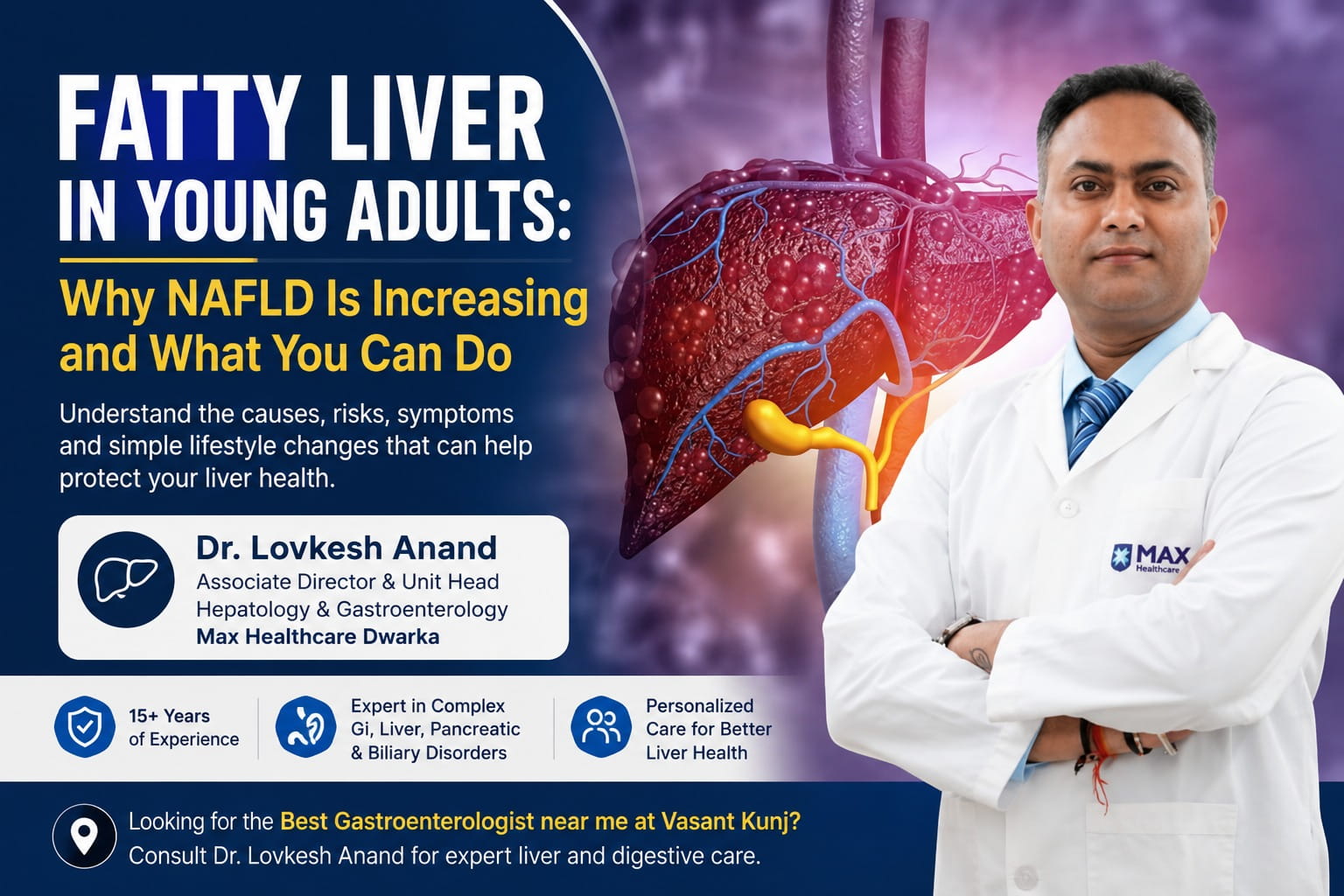
Dr. Lovkesh Anand is a highly skilled and experienced Hepatology and Gastroenterology Expert, with a distinguished career spanning 15+ years across leading medical institutions.
He is currently working as Associate Director & Unit Head at Max Healthcare Dwarka.
His expertise covers the diagnosis and management of a wide range of gastrointestinal, pancreatic, biliary tract and liver-related disorders.
His areas of expertise include:
- Liver failure
- Acute gastrointestinal bleeding
- Hepatic coma
- Liver cancer
- Complex liver disorders
- Gastrointestinal disorders
- Pancreatic disorders
- Biliary tract conditions
- Complex endoscopic procedures
For patients concerned about fatty liver, a specialist evaluation can help identify important risk factors and determine whether lifestyle modification, monitoring or further investigations may be appropriate.
Why Should Young Adults Take Fatty Liver Seriously?
Because your age shouldn’t become a reason to ignore your liver.
If you’re 25, 30 or 35, you may think:
“I’m too young to have liver disease.”
But fatty liver can occur much earlier than many people expect.
And that’s precisely why awareness matters.
A fatty liver diagnosis today can be an opportunity to change your lifestyle before the condition progresses.
Instead of waiting for symptoms, take action when your body gives you an early warning.
Small Lifestyle Changes Can Make a Big Difference
You don’t have to completely change your life overnight.
Start with simple steps:
Replace sugary drinks with water.
Take a walk after sitting for long periods.
Choose home-cooked food more often.
Reduce processed snacks.
Get regular physical activity.
Sleep on time.
Keep your blood sugar and cholesterol under control.
Follow up on abnormal liver tests.
Small decisions repeated every day can become powerful health habits.
Your Liver May Not Complain—So Don’t Wait for It To
Fatty liver can be silent, especially in its early stages.
But silence doesn’t mean you should ignore it.
If you’ve recently discovered fatty liver on an ultrasound, have abnormal liver enzymes, or have metabolic risk factors, consider getting a proper medical evaluation.
With the right approach, young adults can take meaningful steps toward better liver health and a healthier future.
If you’re searching for the Best gastroenterologist near me at Vasant Kunj, Dr. Lovkesh Anand, Associate Director & Unit Head at Max Healthcare Dwarka, brings 15+ years of experience in gastroenterology and hepatology, with expertise in complex liver, gastrointestinal, pancreatic and biliary conditions.
Don’t wait for your liver to hurt before you start taking care of it. Start today.
Frequently Asked Questions
Q1. Can a 25-year-old have fatty liver?
Yes. Fatty liver can occur in young adults and is increasingly associated with metabolic risk factors, sedentary lifestyles, excess body weight and unhealthy dietary patterns.
Q2. Is fatty liver reversible?
Early fatty liver can often be improved with appropriate lifestyle changes and management of underlying metabolic risk factors. The best approach depends on the individual’s overall health and whether fibrosis is present.
Q3. Can thin people have fatty liver?
Yes. Being lean does not completely eliminate the possibility of fatty liver. Metabolic health, genetics, diet and other factors can also contribute.
Q4. Is fatty liver dangerous?
Fatty liver does not always progress to serious liver disease, but some individuals can develop inflammation and fibrosis. Identifying people at higher risk is therefore important.
Q5. Should I see a gastroenterologist for fatty liver?
If fatty liver has been detected, particularly alongside abnormal liver tests, diabetes, obesity, high cholesterol or other risk factors, discussing your condition with a gastroenterologist can help determine the appropriate next steps.
Q6. Can exercise help with fatty liver?
Regular physical activity can support metabolic health and help reduce excess body fat and liver fat. Your exercise plan should be appropriate for your fitness level and medical condition.
Medical Disclaimer: This article is intended for general health awareness and does not replace professional medical diagnosis, treatment or individualized medical advice.